
AuthorJeremy Maher is the co-owner of Phoenix Home Remodeling. ArchivesCategories |
Back to Blog
Hiring a residential general contractor is akin to appointing a maestro for your home construction or renovation project. These professionals are the backbone of ensuring your vision comes to life with efficiency and precision. But what exactly can you expect when you bring a general contractor on board? Residential general contractor services include custom home building, renovations and extensions, kitchen and bathroom remodeling, project management, and overseeing outdoor living space constructions. They ensure compliance with regulations, manage subcontractors and handle project logistics. This article sheds light on the comprehensive range of services these experts provide, from the initial blueprint to the final touches of paint. A Residential General Contractor Key ServicesGeneral contractors offer a comprehensive range of services that cater to all aspects of construction and renovation projects. These services are crucial for ensuring that your project is completed efficiently, on time, and within budget. Here's a closer look at the key services provided by general contractors: Project Management and OversightOne of the primary services offered by general contractors is project management. They oversee the entire construction or renovation project from start to finish. This includes planning the project timeline, coordinating with subcontractors (like electricians, plumbers, and carpenters), and ensuring that all work is completed according to the project specifications and quality standards. Effective project management is essential for keeping the project on track and handling any issues that may arise. Custom Home BuildingFor those looking to build a new home that is tailored to their specific needs and preferences, general contractors can manage the custom home-building process. They work with architects and designers to ensure that the plans meet the homeowner's expectations and comply with all local building codes and regulations. General contractors also coordinate the construction process, ensuring that all aspects of the build are executed correctly. Home Renovations and ExtensionsGeneral contractors are adept at handling home renovations and extensions, whether it’s updating an outdated kitchen or bathroom, adding a new room, or undertaking a complete home makeover. They can help homeowners design the space, obtain necessary permits, and execute the renovation or extension according to the agreed-upon design and specifications. 
Kitchen and Bathroom RemodelingKitchen and bathroom remodels are among the most popular home improvement projects. General contractors can oversee these projects from conception to completion, including design, demolition, construction, installation of fixtures and finishes, and final touches. They ensure that the new design not only meets the homeowner’s aesthetic and functional requirements but also adds value to the home. Repairs and MaintenanceGeneral contractors also provide repair and maintenance services to address issues such as structural repairs, roofing, siding, window replacements, and more. These services help maintain the integrity and value of the home over time. ConsultingFor homeowners who need guidance on a construction or renovation project but plan to do some or all of the work themselves, some general contractors offer consulting services. They can provide expert advice on project planning, design, materials selection, and construction techniques. 
The Importance of Choosing a Qualified General ContractorChoosing a qualified general contractor is a crucial decision in the success of any construction or renovation project. The right contractor not only ensures that your project is completed efficiently and to your satisfaction but also minimizes the risks of delays, budget overruns, and subpar workmanship. Here are the key reasons why selecting a qualified general contractor is so important: Expertise and ExperienceQualified general contractors bring a wealth of expertise and experience to your project. They have a deep understanding of all aspects of construction, from the initial design and planning stages through to the final touches. This expertise is invaluable in foreseeing potential challenges and addressing them before they become problems, ensuring that your project runs smoothly. Quality AssuranceA qualified contractor is committed to delivering high-quality work. They employ skilled tradespeople, use quality materials, and adhere to best practices in construction to ensure that the finished project meets or exceeds your expectations. This focus on quality not only results in a more durable and aesthetically pleasing outcome but also enhances the value of your property. Licensing and CertificationIn most jurisdictions, general contractors are required to be licensed and certified. This ensures that they have met specific qualifications, such as passing competency exams and obtaining the necessary insurance and bonding. Hiring a licensed contractor gives you peace of mind that they are legally authorized to perform the work and that they adhere to the local building codes and regulations. 
Time and Cost ManagementQualified general contractors are adept at managing both time and costs effectively. They develop realistic timelines and budgets and work diligently to adhere to them. They have the experience to accurately estimate costs and the skills to manage the project efficiently, reducing the likelihood of unexpected expenses or delays. Risk ManagementConstruction projects come with inherent risks, including accidents, delays, and unforeseen complications. Qualified general contractors are well-versed in risk management, taking proactive steps to minimize risks. They ensure compliance with safety standards, obtain the necessary permits, and carry insurance to protect you against liability for on-site injuries or property damage. Warranty and AftercareReputable contractors stand behind their work with warranties and aftercare services. This means that if issues arise with the construction or materials used, the contractor will address them in a timely and satisfactory manner. This warranty provides added assurance of the quality of the work and protects your investment in the long term. Peace of MindChoosing a qualified general contractor offers you peace of mind. Knowing that your project is in the hands of a professional who is committed to delivering a successful outcome allows you to focus on the vision for your project without getting bogged down in the details of its execution. 
FAQs On Residential General Contractor Services?Can a general contractor help with design and planning?Yes, many general contractors work closely with architects and designers and can provide valuable input during the design and planning stages. Some contractors may even offer design-build services, where they handle both the design and construction phases of the project. What should be included in a contract with a general contractor?A contract with a general contractor should clearly outline the scope of work, project timeline, payment schedule, and detailed specifications for materials and workmanship. It should also include information about permits, insurance, warranties, and how changes to the project will be handled. How are payments typically structured for a construction project?Payment structures can vary, but they often include an initial deposit, followed by progressive payments tied to specific milestones in the project. The final payment is usually made upon completion of the project, after a final inspection is conducted to ensure all work has been completed to satisfaction. What happens if the project goes over budget or schedule?Going over budget or schedule can happen due to unforeseen challenges or changes to the project scope. A good general contractor will communicate these issues as soon as they arise and work with you to make informed decisions on how to proceed. Exploring the Range of Services OfferedA residential general contractor plays a critical role in turning your construction or renovation dreams into reality. Their wide range of services, combined with their expertise in project management, makes them an invaluable asset. By choosing a qualified contractor and fostering effective collaboration, you can ensure your project is completed to your satisfaction. Video of this post:PDF version:You may also be interested in these topics about General Contractor posts...Do you live in Ahwatukee, Chandler, Gilbert, Mesa, Tempe, Sun Lakes, Laveen, or South Phoenix? Ready to talk about your remodeling needs? Take the next step... Source: https://phxhomeremodeling.com Via https://phxhomeremodeling.com/residential-general-contractor-services/
0 Comments
Back to Blog
The terms "general contractor" and "builder" are often used interchangeably in the construction industry, yet they represent distinctly different roles with unique responsibilities and areas of expertise. So what are the differences between a general contractor and a builder? A general contractor oversees the entire construction project, managing subcontractors, budgets, and schedules. A builder is more hands-on, focusing on the physical construction of the project. General contractors manage the project's big picture, while builders execute the construction details. This article from a general contractor company aims to clarify the differences between these two key players, offering insights into when and why you might choose one over the other for your project. Who is a General Contractor?A general contractor acts as the overseer of a construction project, managing the day-to-day operations and being the main point of contact for everyone involved. They are responsible for ensuring the project is completed on time, within budget, and according to the specified quality standards. Key Responsibilities of a General ContractorThe key responsibilities of a general contractor cover a broad spectrum, ensuring the smooth execution and completion of a construction project. These responsibilities include:

Who is a Builder?Builders, on the other hand, are often more hands-on in the construction process. They typically have a background in construction or carpentry and are directly involved in the physical construction of the project. Their focus is on building structures from the ground up or undertaking significant renovations. Core Functions of a BuilderThe core functions of a builder are central to the physical construction and realization of buildings and structures. These functions span across various stages of construction, from the initial groundwork to the final touches, focusing primarily on the hands-on aspects of building. Here are the key functions of a builder:


The Distinct DifferencesUnderstanding the distinct differences between a general contractor and a builder is crucial when planning a construction project, as it influences the decision on whom to hire based on the project's needs. Here are the key distinctions: Scope of Work and Specialization
Project Management and Coordination

Subcontractor Engagement
Engagement with the Project's Design and Planning Phases

FAQs on Differences Between a General Contractor And a BuilderWhat are the primary differences between a general contractor and a builder?The primary difference lies in the scope of their roles. General contractors manage the overall coordination of a construction project. Builders, on the other hand, are more hands-on and directly involved in the physical construction of the project, focusing on craftsmanship and the execution of building plans. When should I hire a general contractor over a builder?You should consider hiring a general contractor when your project is large or complex, involves multiple subcontractors, or requires significant coordination and project management. General contractors are also valuable for navigating legal and regulatory aspects, such as obtaining permits and ensuring code compliance. Can a builder also act as a general contractor?Yes, in some cases, a builder may also serve as a general contractor, especially in smaller projects or when they have the necessary skills and experience to manage the project's broader aspects. However, this dual role requires the builder to have experience in project management, budgeting, and coordination, in addition to their construction skills. Do general contractors and builders need different licenses or certifications?Licensing requirements vary by location and the nature of the work. Generally, both general contractors and builders need to be licensed to operate legally, but the specific requirements can differ. It's essential to check your local regulations to understand the licensing, certifications, and insurance needed for your project. Telling The DifferenceChoosing between a general contractor and a builder is a decision that impacts the success of your construction project. By understanding the distinct roles each plays, you can make an informed choice that aligns with your project needs and goals. Video of this post:PDF version:You may also be interested in these topics about general contractor posts...Do you live in Ahwatukee, Chandler, Gilbert, Mesa, Tempe, Sun Lakes, Laveen, or South Phoenix? Ready to talk about your remodeling needs? Take the next step... Source: https://phxhomeremodeling.com Via https://phxhomeremodeling.com/differences-between-a-general-contractor-and-a-builder/
Back to Blog
Finding a trustworthy general contractor is pivotal for the success of your construction project. A reliable general contractor ensures your project is completed on time, within budget, and meets all quality standards. To find a general contractor, seek referrals, verify credentials and insurance, assess their experience with similar projects, request and contact references, compare detailed bids, and ensure clear communication and a solid contract are established before beginning your project. This article outlines essential strategies on how to find a general contractor who won't let you down. Understanding the Role of a General ContractorA general contractor oversees the day-to-day operations of a construction project, manages subcontractors, ensures compliance with building codes, and communicates project progress to the stakeholders. Hiring a competent contractor is crucial for the smooth execution of your project. The Core Responsibilities of a General ContractorGeneral contractors are the backbone of any construction project. They are responsible for procuring materials, managing personnel, and ensuring the project adheres to plans and regulations. Why Your Project Needs a Competent ContractorA skilled contractor brings your vision to life while navigating the complexities of construction management, ensuring a seamless transition from concept to completion. 
How To Hire A General ContractorHiring a general contractor is a critical step in ensuring the success of any construction or renovation project. A good contractor manages the project from start to finish, coordinating all aspects of the work to ensure it's completed on time, within budget, and to your satisfaction. Here’s a comprehensive guide on how to hire a general contractor: Understand Your ProjectBefore you start looking for a contractor, have a clear understanding of your project. Know the scope, what you want to achieve, and your budget. This clarity will help you communicate your needs more effectively to potential contractors and evaluate their suitability for your project. Gather RecommendationsStart your search by asking for recommendations from friends, family, and colleagues who have recently undertaken similar projects. You can also consult online reviews and ratings on trusted platforms to find reputable contractors in your area. Check Credentials and ExperienceOnce you have a list of potential contractors, verify their credentials. Ensure they have the necessary licenses and insurance to perform the work. Look into their experience, particularly with projects similar to yours. Ask for a portfolio of their work and references from previous clients. Conduct InterviewsInterviewing potential contractors is essential. Prepare a list of questions to ask, such as their approach to project management, communication, timeline, and budget management. This is also the time to gauge their professionalism and whether you can have a good working relationship with them. Request and Compare BidsAsk for detailed bids from at least three contractors. The bids should include a breakdown of costs, materials, labor, profit margins, and other expenses. Comparing bids will help you understand the cost drivers of your project and assess 
Evaluate the ContractOnce you've selected a contractor, carefully review the contract they provide. Ensure it includes a detailed scope of work, project timeline, payment schedule, and provisions for changes or unexpected issues that may arise during the project. Don't hesitate to ask for clarifications or adjustments before signing. Communicate Your ExpectationsClear communication is key to the success of your project. Discuss your expectations with your contractor, including the work schedule, daily start and finish times, and any restrictions regarding access to your property. Plan for IssuesEven with the best planning, issues can arise. Discuss with your contractor how unforeseen problems will be handled, including delays, additional costs, and changes in scope. Knowing the process for addressing these issues upfront can save a lot of stress later on. Stay InvolvedWhile your contractor will manage the day-to-day aspects of the project, stay involved. Regular check-ins and site visits can help ensure that the project is progressing as expected and allow you to address any concerns promptly. Final WalkthroughBefore making the final payment, conduct a final walkthrough with your contractor. Review the work to ensure it meets your expectations and the terms of the contract. Any issues should be addressed before the project is considered complete. 
How To Find A Local General Contractor Near MeFinding a local general contractor near you involves a combination of research, verification, and careful evaluation to ensure they are reputable, skilled, and capable of meeting your project's requirements. Here’s a guide to help you locate and hire a competent general contractor in your area: Start with ReferralsThe most reliable way to find a good general contractor is through personal referrals. Ask friends, family, and neighbors about contractors they've used and would recommend. Personal experiences can give you insight into a contractor’s quality of work, reliability, and communication style. Use Online ResourcesSeveral online platforms can help you find local contractors. Websites like HomeAdvisor, Angie’s List, and the Better Business Bureau allow you to search for contractors in your area. You can see reviews, ratings, and sometimes even portfolios of their work. Utilizing Google search with specific keywords like “general contractor near me†or “local construction companies†can also yield valuable results. Check the Local Building Inspection OfficeLocal building inspection offices often have lists of general contractors who regularly work in your area. These contractors are usually familiar with local building codes and regulations, which can be a significant advantage for your project. Visit Local Hardware and Building Supply StoresLocal hardware and lumber yards are great places to find contractor referrals. These stores frequently interact with contractors daily and can often recommend those who purchase high-quality materials and have a good reputation in the community. 
Key Questions To Ask A General Contractor During InterviewsInterviewing potential general contractors is a crucial step in selecting the right professional for your construction or renovation project. The questions you ask will help you gauge their expertise, reliability, and fit for your project. Here’s a list of key questions to consider during the interview process: About Experience and Expertise
About Project Management
About the Team
Financial and Contract Questions

About the Work Process
After the Project
Asking these questions during the interview process will give you a comprehensive view of what to expect from potential contractors. Their answers can help you make an informed decision on who is the best fit for bringing your project to life 
FAQs On How To Find A General ContractorHow do I ensure the contractor understands my vision?Communicate your expectations clearly and provide as much detail as possible. Visual aids and detailed plans can help convey your vision accurately. What red flags should I look out for when choosing a contractor?Be wary of contractors who provide vague details, lack proper licensing and insurance, or have a history of unresolved complaints. How can I effectively compare different contractors’ bids?Look beyond the price and assess the value each contractor brings, including their experience, reputation, and the quality of their proposal. Can I negotiate the price with a general contractor?Yes, it's possible to negotiate. However, focus on value rather than just cutting costs, as the lowest bid is not always the best option. Navigating The General Contractor Selection ProcessSelecting the right general contractor is a decision that should not be taken lightly. By following these strategies, you can find a contractor who understands your vision, communicates effectively, and delivers a quality project within your budget and timeline. Take your time, do your research, and trust your instincts to ensure your construction project is in good hands. Video of this post:PDF version:You may also be interested in these topics about General Contractor Posts...Do you live in Ahwatukee, Chandler, Gilbert, Mesa, Tempe, Sun Lakes, Laveen, or South Phoenix? Ready to talk about your remodeling needs? Take the next step... Source: https://phxhomeremodeling.com Via https://phxhomeremodeling.com/how-to-find-a-general-contractor/
Back to Blog
Mesa Kitchen and Bathroom Remodeling6/19/2024
Mesa Kitchen and Bathroom Remodeling offers interior remodels including kitchens, bathrooms, showers, living rooms, home offices, fireplaces, and more. We are a premier renovation company, specializing in transforming spaces to reflect the homeowner's personal style and needs. Our team of experienced designers and general contractors work closely with each client, guiding them through a detailed planning and design process. This approach ensures that every aspect of the renovation, from layout to material selection, is tailored to fit the homeowner's vision and lifestyle.
From https://www.youtube.com/watch?v=m9csGtrh7KI
Back to Blog
Kitchen Remodel Designer New5/27/2024 need a great kitchen remodeling designer?With our dedicated team, we can turn your culinary space into a haven of functionality and style. Want A home makeover? hiring a designer for a kitchen remodelWhen planning a kitchen makeover, hiring a professional kitchen remodel designer can significantly enhance your overall experience and the outcome of your renovation. Partnering with a skilled designer for kitchen remodel brings many advantages that can save you time, money, and stress. So, Why Hiring An In-House Designer With Construction Knowledge Is Beneficial For You? Hiring an in-house designer with construction knowledge within a kitchen remodeling company can offer additional advantages that set your project up for success. Dreaming of a Home Makeover? Let's Chat! Redesigning With An Expert Interior Designer For Kitchen RemodelWe understand that your kitchen is the heart of your home, and its redesign deserves careful attention and expertise. Our team of professional interior designers is dedicated to turning your kitchen remodel dreams into reality. Whether your vision includes updated cabinets, elegant countertops, modern sinks, or the addition of a stylish kitchen island, our kitchen remodel designers are equipped with the knowledge and experience to bring these elements together seamlessly. We take pride in our design-build remodeling method, where you conceptualize the design and witness rendered versions of your envisioned kitchen. This approach ensures that your vision is accurately translated and makes the renovation process smoother and stress-free. Your kitchen remodel isn't just a renovation; it's a transformative experience that results in a space that aligns perfectly with your lifestyle and preferences. Our professional kitchen remodel designers are here to guide you through every step of the journey, from concept to completion, ensuring that your kitchen becomes a true reflection of your personality and functional needs. Learn Why Your NeighborsRecommend UsCheckout what your neighbors are saying about our work


Kitchen remodel designs in Phoenix & surrounding areasOur home remodel designer has the expertise that goes beyond simple changes; it's about crafting an entirely new atmosphere and revitalizing your kitchen. We understand that a kitchen is more than just a place to cook – it's where you create memories, experiment with flavors, and share laughter. Our kitchen remodeling designer magic aims to elevate these everyday experiences, infusing a refreshed mood that resonates with every recipe and each cherished moment. 


Schedule Your Phone Consultation Receive a phone call at the perfect time for you by scheduling your phone consultation. Our Admin Manager will review your remodel needs, provide advice, answer your questions, and give a price estimate. If it's a good fit at the end of the call, we schedule the in-home evaluation, and then provide a written proposal. Redesigning Made Easy with a Kitchen remodel designer near meRevitalizing your kitchen has never been simpler – with the expertise of a nearby designer for kitchen remodel, the transformation process becomes a seamless journey toward your dream culinary space. Choosing a designer for kitchen remodel near you not only ensures convenience but also unlocks many benefits that contribute to a stress-free and successful redesign. 
Pros of Choosing a nearby designer for Your kitchen remodel
4-Step Kitchen Remodel Plan #2 In-Home Evaluation If initial call goes well, we schedule an in-home evaluation. At the in-home appointment, we further discuss your remodel needs, take measurements, and send you a written proposal. #3 Planning & Design You sign the feasibility, planning, & design agreement and start your design process. We work together on your project scope, designs, and price so everything is planned out before the construction starts. #4 Construction You sign the construction agreement and we start your home remodel project, while keeping you in the loop the entire time. We complete your dream space to enjoy and share with your friends, family & neighbors! we provide home remodel designer services in These areasPhoenix Home Remodeling provides kitchen remodeling designer services in South Phoenix, Chandler, Ahwatukee, Sun Lakes, Gilbert, Laveen, Tempe, and Mesa. Let's start planning your kitchen makeover today! We are are also a certified bathroom remodel designer!
Schedule Your Phone Consultation
Receive a phone call at the perfect time for you by scheduling your phone consultation.
Source: https://phxhomeremodeling.com Via https://phxhomeremodeling.com/k-r-d/
Back to Blog
Bathroom Remodel Designer5/27/2024 Bathroom Remodeling DesignerReady to take your bathroom to the next level? Our expert bathroom remodel designer is here to help upgrade your space into a haven of tranquility. Want A home makeover? hiring a designer for a bathroom remodelWhen considering a bathroom transformation, enlisting the services of an experienced bathroom remodel designer can greatly amplify your entire process and the final results of your renovation project. Collaborating with a proficient designer for a bathroom remodel offers numerous benefits that have the potential to minimize your time investment, optimize your financial resources, and alleviate any unnecessary pressures. How an In-House Designer with Construction Knowledge Benefits You Engaging an in-house designer within a remodeling company offers a strategic advantage when considering a bathroom remodel. These professionals fuse design creativity with construction know-how, ensuring a seamless and efficient transformation. In-house designers facilitate smooth collaboration among all project partners. Their dual mastery of design and construction minimizes design alterations during construction, saving time and resources. Problem-solving is enhanced as in-house designers expect challenges, addressing them in the design phase. Their grasp of project timelines and construction practices ensures a synchronized timeline for design and construction. Utilizing advanced software, in-house designers provide visual renderings, allowing you to preview the design before construction. Their comprehensive perspective ensures an outcome that marries design aesthetics and structural integrity. Collaborating with an in-house designer means tailored solutions reflecting your vision and lifestyle. Their expertise contributes to a successful bathroom remodel by optimizing design, functionality, and efficient execution. Dreaming of a Home Makeover? Let's Chat! Collaborating with an Expert Interior Designer for A Bathroom RemodelWhen embarking on a bathroom remodel journey, partnering with an expert interior designer can elevate the process and outcome to new heights of sophistication and functionality. We understand that your bathroom is a haven of relaxation and personal rejuvenation. Our team of professional interior designers is committed to turning your bathroom remodel aspirations into a reality that exceeds your expectations. Whether your vision encompasses updated cabinets, a sleek vanity, a spacious walk-in shower, or indulgent bathtubs, our experienced designers possess the expertise to integrate these elements seamlessly. We take immense pride in our design-build approach, allowing you to conceptualize the design and envision a rendered representation of your envisioned bathroom. This innovative approach ensures that your vision is accurately translated, fostering a renovation process that is both fluid and stress-free. Phoenix Home Remodeling isn't just about remodeling; it's about transforming your bathroom into a sanctuary that aligns harmoniously with your preferences and lifestyle. Our dedicated professional designers will accompany you every step, guiding the transition from concept to realization. With our expertise, your bathroom remodels will be a testament to your unique style, creating a space where relaxation and luxury flourish. Learn Why Your NeighborsRecommend UsCheckout what your neighbors are saying about our work
Bathroom remodel designs in PhoenixA bathroom remodel goes beyond the superficial; it's a craft of weaving comfort with luxury. At the heart of our Phoenixhome remodel designer results lies the understanding that remodeling isn't merely about changing fixtures but curating a sanctuary. It's where refreshed designs meet stress-relief, offering more than just a space – it's a rejuvenated escape. 


Schedule Your Phone Consultation Receive a phone call at the perfect time for you by scheduling your phone consultation. Our Admin Manager will review your remodel needs, provide advice, answer your questions, and give a price estimate. If it's a good fit at the end of the call, we schedule the in-home evaluation, and then provide a written proposal. bathroom remodel designer near meRevamping your bathroom becomes effortlessly convenient when collaborating with a nearby designer for bathroom remodel. This proximity streamlines communication and consultations, making decisions efficient and informed. With a local interior designer for bathroom remodel, you tap into their familiarity with regional trends and regulations, ensuring your remodel fits seamlessly within the local context. The benefits extend to practicality as well. Site visits are more manageable, allowing for accurate measurements and tailored design solutions. Swift responses and adjustments are the norm, maintaining project momentum and minimizing delays. Partnering with a nearby bathroom remodel designer streamlines the process, ensuring an efficient and effective redesign that aligns perfectly with local aesthetics and practical considerations. Your bathroom transformation becomes an accessible reality, all while enhancing convenience and communication. 
we provide home remodel designer services in These areasPhoenix Home Remodeling provides bathroom remodeling designer services in Mesa, Laveen, Gilbert, South Phoenix, Chandler, Ahwatukee, Sun Lakes, and Tempe. Let's start planning your bathroom makeover today! If you need a kitchen remodel designer, we can also help with that! 4-Step Bathroom Remodel Plan #2 In-Home Evaluation If initial call goes well, we schedule an in-home evaluation. At the in-home appointment, we further discuss your remodel needs, take measurements, and send you a written proposal. #3 Planning & Design You sign the feasibility, planning, & design agreement and start your design process. We work together on your project scope, designs, and price so everything is planned out before the construction starts. #4 Construction You sign the construction agreement and we start your home remodel project, while keeping you in the loop the entire time. We complete your dream space to enjoy and share with your friends, family & neighbors!
Schedule Your Phone Consultation
Receive a phone call at the perfect time for you by scheduling your phone consultation.
Source: https://phxhomeremodeling.com Via https://phxhomeremodeling.com/bathroom-remodel-designer-new/
Back to Blog
Kitchen remodel designer 15/25/2024 need a great kitchen remodeling designer?With our dedicated team, we can turn your culinary space into a haven of functionality and style. Want A home makeover? hiring a designer for a kitchen remodelWhen planning a kitchen makeover, hiring a professional kitchen remodel designer can significantly enhance your overall experience and the outcome of your renovation. Partnering with a skilled designer for kitchen remodel brings many advantages that can save you time, money, and stress. So, Why Hiring An In-House Designer With Construction Knowledge Is Beneficial For You? Hiring an in-house designer with construction knowledge within a kitchen remodeling company can offer additional advantages that set your project up for success. Dreaming of a Home Makeover? Let's Chat! Redesigning With An Expert Interior Designer For Kitchen RemodelWe understand that your kitchen is the heart of your home, and its redesign deserves careful attention and expertise. Our team of professional interior designers is dedicated to turning your kitchen remodel dreams into reality. Whether your vision includes updated cabinets, elegant countertops, modern sinks, or the addition of a stylish kitchen island, our kitchen remodel designers are equipped with the knowledge and experience to bring these elements together seamlessly. We take pride in our design-build remodeling method, where you conceptualize the design and witness rendered versions of your envisioned kitchen. This approach ensures that your vision is accurately translated and makes the renovation process smoother and stress-free. Your kitchen remodel isn't just a renovation; it's a transformative experience that results in a space that aligns perfectly with your lifestyle and preferences. Our professional kitchen remodel designers are here to guide you through every step of the journey, from concept to completion, ensuring that your kitchen becomes a true reflection of your personality and functional needs. What Your Neighbors Are Saying "PHX home remodeling was great for our home remodel. I have never had an easier experience working with a GC. Natalie H. | 2024 Amazing experience with Phoenix Home Remodeling. We bought a home and needed to have it completely remodeled. We remodeled the kitchen, 2 bathrooms, knocked thru 2 walls to add pass thrus, added a huge linen closet and turned empty space into a closet. We got multiple quotes and PHR was not only most professional but their prices were reasonable. I told them about my timeline and they were so accommodating to get it done on time. They were excellent at communication and ensuring things were done the way we liked and giving suggestions along the way. Their work was top notch! They did the little detail oriented things and it is so appreciated. The end result was absolutely perfect! Marisa H. | 2022 "I recently had Phoenix Home Remodeling complete renovations in both my master, (2) guest bathrooms, kitchen, and entertainment wall in my home. I can’t tell you how happy I am with the results!! The process they set in place and communication on a daily basis made the entire project so much easier than expected. The use of software helped to keep me on budget and communication between the team and myself seamless. The team of employees were amazing to work with; especially given this was my first time remodeling a home. The work and amount of care for my home, lifestyle (we lived in the house during the construction), and quality of work was evident from day one until completion. I am pleased beyond measure with my newly updated home and cannot thank Phoenix Home Remodeling enough for their time, effort, and personalization they put into making this project well worth the investment. Thank you PHR!!" Julie M. | 2020 "Easy to work with this team. I've worked with many contractors over the years and I must say this is the first time I've ever really been impressed. They showed up daily on time, worked hard the whole time they were there, listened to what we wanted, did an awesome job, completed on time as promised, fairly priced and cleaned up their job site daily. Would definitely recommend and will use them again if needed. Thanks to Jeremy for reaching out to my request, and thanks to Mark and Ben for helping us create our dream shower!!" Dawn G. | 2018 We could not be happier with Phoenix Home Remodeling! From the time we met them to discuss the project, through the design process, and to the completion of the remodel, they were always on time, clear in their communication, and providing excellent work. Eric F. | 2023 "We recently used Phoenix Home Remodeling to remodel our early 2000’s Kitchen. The process was very easy and we enjoyed getting to know the team that came to do the work! We appreciated the straightforward approach to the overall plan, expectations, timing, and cost. This is a local to Ahwatukee company which was very reassuring that these folks not only work but live in this community with their name on the line. Communication was seamless and the work was exactly what we wanted! We will definitely use them again for future work and highly recommend them. Thanks for a great experience, and fantastic results!" Maggie M. | 2021 As a commercial contractor my experience with residential contractors has been less than stellar so I am generally jaded towards them. These folks are not like residential contractors. Our first remodel and largest expense outside of the home or auto purchase and they made it as easy as possible for us. Colin P. | 2019 "My wife and I were nervous to hire a home remodeling company. Ryan B. | 2017 "PHX home remodeling was great for our home remodel. I have never had an easier experience working with a GC. Natalie H. | 2024 We could not be happier with Phoenix Home Remodeling! From the time we met them to discuss the project, through the design process, and to the completion of the remodel, they were always on time, clear in their communication, and providing excellent work. Eric F. | 2023 Amazing experience with Phoenix Home Remodeling. We bought a home and needed to have it completely remodeled. We remodeled the kitchen, 2 bathrooms, knocked thru 2 walls to add pass thrus, added a huge linen closet and turned empty space into a closet. We got multiple quotes and PHR was not only most professional but their prices were reasonable. I told them about my timeline and they were so accommodating to get it done on time. They were excellent at communication and ensuring things were done the way we liked and giving suggestions along the way. Their work was top notch! They did the little detail oriented things and it is so appreciated. The end result was absolutely perfect! Marisa H. | 2022 "We recently used Phoenix Home Remodeling to remodel our early 2000’s Kitchen. The process was very easy and we enjoyed getting to know the team that came to do the work! We appreciated the straightforward approach to the overall plan, expectations, timing, and cost. This is a local to Ahwatukee company which was very reassuring that these folks not only work but live in this community with their name on the line. Communication was seamless and the work was exactly what we wanted! We will definitely use them again for future work and highly recommend them. Thanks for a great experience, and fantastic results!" Maggie M. | 2021 "I recently had Phoenix Home Remodeling complete renovations in both my master, (2) guest bathrooms, kitchen, and entertainment wall in my home. I can’t tell you how happy I am with the results!! The process they set in place and communication on a daily basis made the entire project so much easier than expected. The use of software helped to keep me on budget and communication between the team and myself seamless. The team of employees were amazing to work with; especially given this was my first time remodeling a home. The work and amount of care for my home, lifestyle (we lived in the house during the construction), and quality of work was evident from day one until completion. I am pleased beyond measure with my newly updated home and cannot thank Phoenix Home Remodeling enough for their time, effort, and personalization they put into making this project well worth the investment. Thank you PHR!!" Julie M. | 2020 As a commercial contractor my experience with residential contractors has been less than stellar so I am generally jaded towards them. These folks are not like residential contractors. Our first remodel and largest expense outside of the home or auto purchase and they made it as easy as possible for us. Colin P. | 2019 "Easy to work with this team. I've worked with many contractors over the years and I must say this is the first time I've ever really been impressed. They showed up daily on time, worked hard the whole time they were there, listened to what we wanted, did an awesome job, completed on time as promised, fairly priced and cleaned up their job site daily. Would definitely recommend and will use them again if needed. Thanks to Jeremy for reaching out to my request, and thanks to Mark and Ben for helping us create our dream shower!!" Dawn G. | 2018 "My wife and I were nervous to hire a home remodeling company. Ryan B. | 2017 Kitchen remodel designs in Phoenix & surrounding areasOur home remodel designer has the expertise that goes beyond simple changes; it's about crafting an entirely new atmosphere and revitalizing your kitchen. We understand that a kitchen is more than just a place to cook – it's where you create memories, experiment with flavors, and share laughter. Our kitchen remodeling designer magic aims to elevate these everyday experiences, infusing a refreshed mood that resonates with every recipe and each cherished moment. 

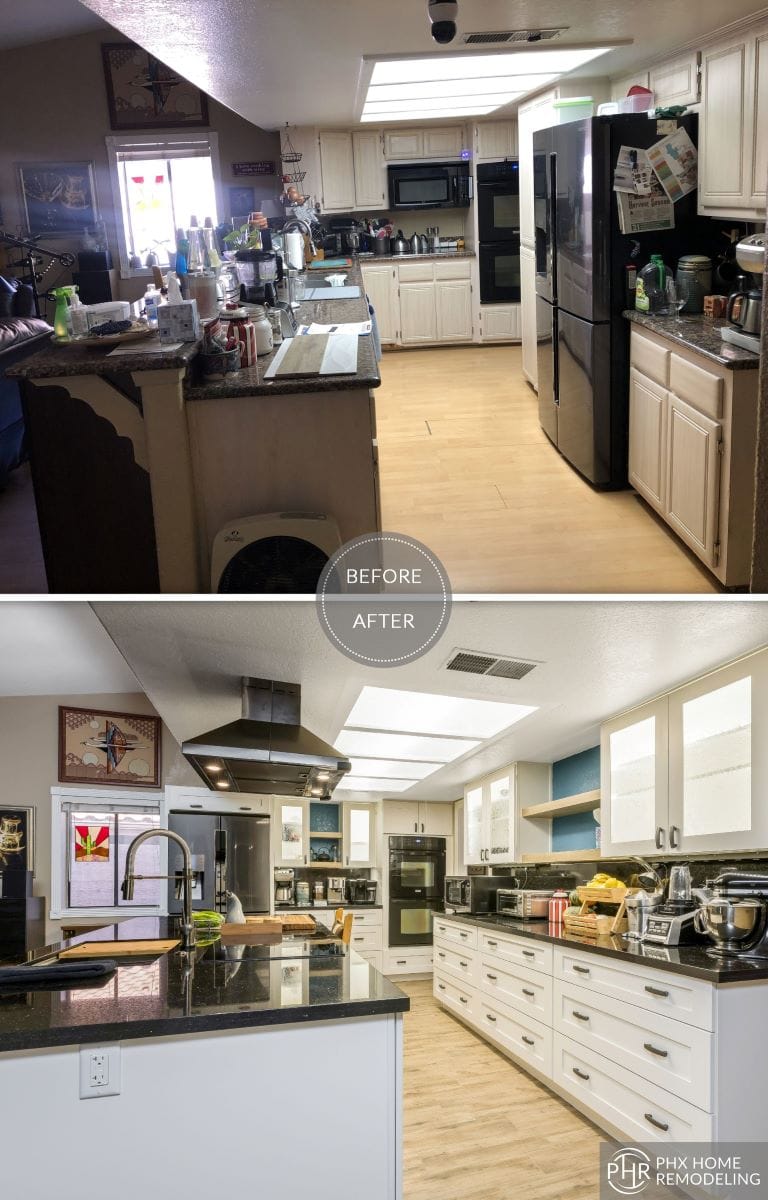


Schedule Your Phone Consultation Receive a phone call at the perfect time for you by scheduling your phone consultation. Our Admin Manager will review your remodel needs, provide advice, answer your questions, and give a price estimate. If it's a good fit at the end of the call, we schedule the in-home evaluation, and then provide a written proposal. Redesigning Made Easy with a Kitchen remodel designer near meRevitalizing your kitchen has never been simpler – with the expertise of a nearby designer for kitchen remodel, the transformation process becomes a seamless journey toward your dream culinary space. Choosing a designer for kitchen remodel near you not only ensures convenience but also unlocks many benefits that contribute to a stress-free and successful redesign. 
Pros of Choosing a nearby designer for Your kitchen remodel
4-Step Kitchen Remodel Plan #2 In-Home Evaluation If initial call goes well, we schedule an in-home evaluation. At the in-home appointment, we further discuss your remodel needs, take measurements, and send you a written proposal. #3 Planning & Design You sign the feasibility, planning, & design agreement and start your design process. We work together on your project scope, designs, and price so everything is planned out before the construction starts. #4 Construction You sign the construction agreement and we start your home remodel project, while keeping you in the loop the entire time. We complete your dream space to enjoy and share with your friends, family & neighbors! we provide home remodel designer services in These areasPhoenix Home Remodeling provides kitchen remodeling designer services in South Phoenix, Chandler, Ahwatukee, Sun Lakes, Gilbert, Laveen, Tempe, and Mesa. Let's start planning your kitchen makeover today! We are are also a certified bathroom remodel designer!
Schedule Your Phone Consultation
Receive a phone call at the perfect time for you by scheduling your phone consultation.
Source: https://phxhomeremodeling.com Via https://phxhomeremodeling.com/kitchen-remodel-designer-1/
Back to Blog
Bathroom remodel designer 15/25/2024 Bathroom Remodeling DesignerReady to take your bathroom to the next level? Our expert bathroom remodel designer is here to help upgrade your space into a haven of tranquility. Want A home makeover? hiring a designer for a bathroom remodelWhen considering a bathroom transformation, enlisting the services of an experienced bathroom remodel designer can greatly amplify your entire process and the final results of your renovation project. Collaborating with a proficient designer for a bathroom remodel offers numerous benefits that have the potential to minimize your time investment, optimize your financial resources, and alleviate any unnecessary pressures. How an In-House Designer with Construction Knowledge Benefits You Engaging an in-house designer within a remodeling company offers a strategic advantage when considering a bathroom remodel. These professionals fuse design creativity with construction know-how, ensuring a seamless and efficient transformation. In-house designers facilitate smooth collaboration among all project partners. Their dual mastery of design and construction minimizes design alterations during construction, saving time and resources. Problem-solving is enhanced as in-house designers expect challenges, addressing them in the design phase. Their grasp of project timelines and construction practices ensures a synchronized timeline for design and construction. Utilizing advanced software, in-house designers provide visual renderings, allowing you to preview the design before construction. Their comprehensive perspective ensures an outcome that marries design aesthetics and structural integrity. Collaborating with an in-house designer means tailored solutions reflecting your vision and lifestyle. Their expertise contributes to a successful bathroom remodel by optimizing design, functionality, and efficient execution. Dreaming of a Home Makeover? Let's Chat! Collaborating with an Expert Interior Designer for A Bathroom RemodelWhen embarking on a bathroom remodel journey, partnering with an expert interior designer can elevate the process and outcome to new heights of sophistication and functionality. We understand that your bathroom is a haven of relaxation and personal rejuvenation. Our team of professional interior designers is committed to turning your bathroom remodel aspirations into a reality that exceeds your expectations. Whether your vision encompasses updated cabinets, a sleek vanity, a spacious walk-in shower, or indulgent bathtubs, our experienced designers possess the expertise to integrate these elements seamlessly. We take immense pride in our design-build approach, allowing you to conceptualize the design and envision a rendered representation of your envisioned bathroom. This innovative approach ensures that your vision is accurately translated, fostering a renovation process that is both fluid and stress-free. Phoenix Home Remodeling isn't just about remodeling; it's about transforming your bathroom into a sanctuary that aligns harmoniously with your preferences and lifestyle. Our dedicated professional designers will accompany you every step, guiding the transition from concept to realization. With our expertise, your bathroom remodels will be a testament to your unique style, creating a space where relaxation and luxury flourish. What Your Neighbors Are Saying "PHX home remodeling was great for our home remodel. I have never had an easier experience working with a GC. Natalie H. | 2024 Amazing experience with Phoenix Home Remodeling. We bought a home and needed to have it completely remodeled. We remodeled the kitchen, 2 bathrooms, knocked thru 2 walls to add pass thrus, added a huge linen closet and turned empty space into a closet. We got multiple quotes and PHR was not only most professional but their prices were reasonable. I told them about my timeline and they were so accommodating to get it done on time. They were excellent at communication and ensuring things were done the way we liked and giving suggestions along the way. Their work was top notch! They did the little detail oriented things and it is so appreciated. The end result was absolutely perfect! Marisa H. | 2022 "I recently had Phoenix Home Remodeling complete renovations in both my master, (2) guest bathrooms, kitchen, and entertainment wall in my home. I can’t tell you how happy I am with the results!! The process they set in place and communication on a daily basis made the entire project so much easier than expected. The use of software helped to keep me on budget and communication between the team and myself seamless. The team of employees were amazing to work with; especially given this was my first time remodeling a home. The work and amount of care for my home, lifestyle (we lived in the house during the construction), and quality of work was evident from day one until completion. I am pleased beyond measure with my newly updated home and cannot thank Phoenix Home Remodeling enough for their time, effort, and personalization they put into making this project well worth the investment. Thank you PHR!!" Julie M. | 2020 "Easy to work with this team. I've worked with many contractors over the years and I must say this is the first time I've ever really been impressed. They showed up daily on time, worked hard the whole time they were there, listened to what we wanted, did an awesome job, completed on time as promised, fairly priced and cleaned up their job site daily. Would definitely recommend and will use them again if needed. Thanks to Jeremy for reaching out to my request, and thanks to Mark and Ben for helping us create our dream shower!!" Dawn G. | 2018 We could not be happier with Phoenix Home Remodeling! From the time we met them to discuss the project, through the design process, and to the completion of the remodel, they were always on time, clear in their communication, and providing excellent work. Eric F. | 2023 "We recently used Phoenix Home Remodeling to remodel our early 2000’s Kitchen. The process was very easy and we enjoyed getting to know the team that came to do the work! We appreciated the straightforward approach to the overall plan, expectations, timing, and cost. This is a local to Ahwatukee company which was very reassuring that these folks not only work but live in this community with their name on the line. Communication was seamless and the work was exactly what we wanted! We will definitely use them again for future work and highly recommend them. Thanks for a great experience, and fantastic results!" Maggie M. | 2021 As a commercial contractor my experience with residential contractors has been less than stellar so I am generally jaded towards them. These folks are not like residential contractors. Our first remodel and largest expense outside of the home or auto purchase and they made it as easy as possible for us. Colin P. | 2019 "My wife and I were nervous to hire a home remodeling company. Ryan B. | 2017 "PHX home remodeling was great for our home remodel. I have never had an easier experience working with a GC. Natalie H. | 2024 We could not be happier with Phoenix Home Remodeling! From the time we met them to discuss the project, through the design process, and to the completion of the remodel, they were always on time, clear in their communication, and providing excellent work. Eric F. | 2023 Amazing experience with Phoenix Home Remodeling. We bought a home and needed to have it completely remodeled. We remodeled the kitchen, 2 bathrooms, knocked thru 2 walls to add pass thrus, added a huge linen closet and turned empty space into a closet. We got multiple quotes and PHR was not only most professional but their prices were reasonable. I told them about my timeline and they were so accommodating to get it done on time. They were excellent at communication and ensuring things were done the way we liked and giving suggestions along the way. Their work was top notch! They did the little detail oriented things and it is so appreciated. The end result was absolutely perfect! Marisa H. | 2022 "We recently used Phoenix Home Remodeling to remodel our early 2000’s Kitchen. The process was very easy and we enjoyed getting to know the team that came to do the work! We appreciated the straightforward approach to the overall plan, expectations, timing, and cost. This is a local to Ahwatukee company which was very reassuring that these folks not only work but live in this community with their name on the line. Communication was seamless and the work was exactly what we wanted! We will definitely use them again for future work and highly recommend them. Thanks for a great experience, and fantastic results!" Maggie M. | 2021 "I recently had Phoenix Home Remodeling complete renovations in both my master, (2) guest bathrooms, kitchen, and entertainment wall in my home. I can’t tell you how happy I am with the results!! The process they set in place and communication on a daily basis made the entire project so much easier than expected. The use of software helped to keep me on budget and communication between the team and myself seamless. The team of employees were amazing to work with; especially given this was my first time remodeling a home. The work and amount of care for my home, lifestyle (we lived in the house during the construction), and quality of work was evident from day one until completion. I am pleased beyond measure with my newly updated home and cannot thank Phoenix Home Remodeling enough for their time, effort, and personalization they put into making this project well worth the investment. Thank you PHR!!" Julie M. | 2020 As a commercial contractor my experience with residential contractors has been less than stellar so I am generally jaded towards them. These folks are not like residential contractors. Our first remodel and largest expense outside of the home or auto purchase and they made it as easy as possible for us. Colin P. | 2019 "Easy to work with this team. I've worked with many contractors over the years and I must say this is the first time I've ever really been impressed. They showed up daily on time, worked hard the whole time they were there, listened to what we wanted, did an awesome job, completed on time as promised, fairly priced and cleaned up their job site daily. Would definitely recommend and will use them again if needed. Thanks to Jeremy for reaching out to my request, and thanks to Mark and Ben for helping us create our dream shower!!" Dawn G. | 2018 "My wife and I were nervous to hire a home remodeling company. Ryan B. | 2017 Bathroom remodel designs in PhoenixA bathroom remodel goes beyond the superficial; it's a craft of weaving comfort with luxury. At the heart of our Phoenixhome remodel designer results lies the understanding that remodeling isn't merely about changing fixtures but curating a sanctuary. It's where refreshed designs meet stress-relief, offering more than just a space – it's a rejuvenated escape. 


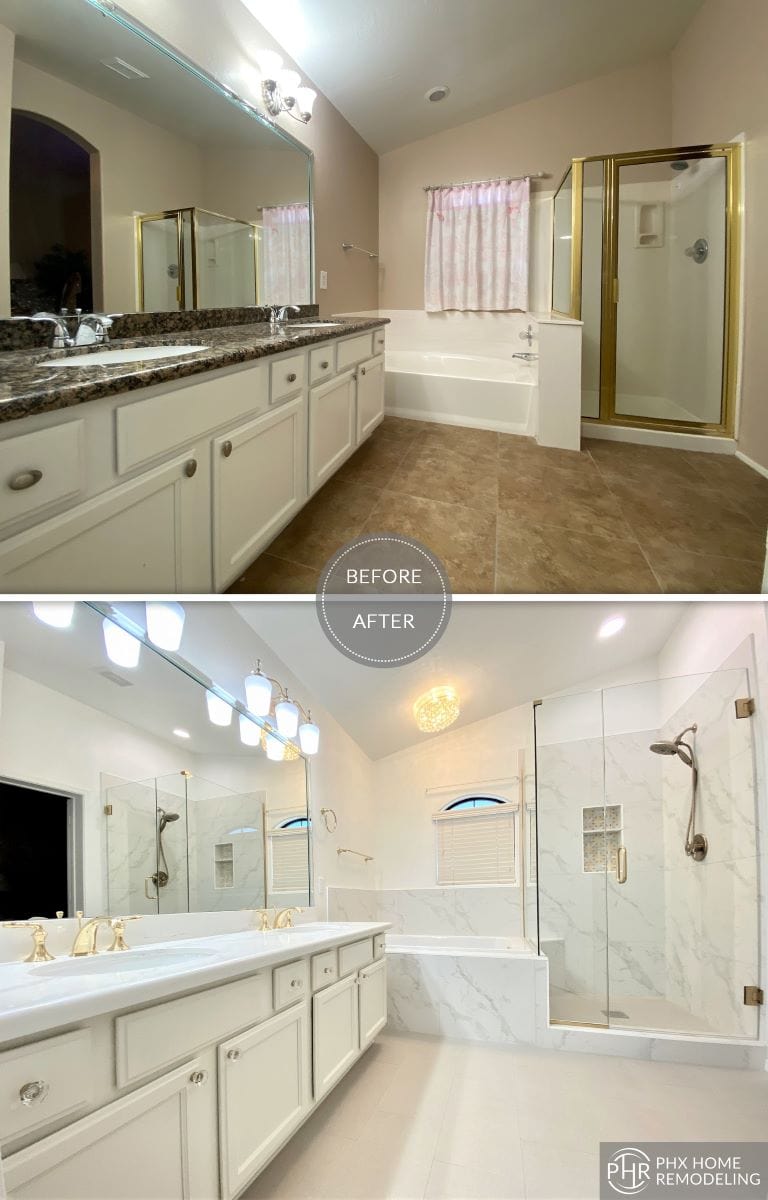

Schedule Your Phone Consultation Receive a phone call at the perfect time for you by scheduling your phone consultation. Our Admin Manager will review your remodel needs, provide advice, answer your questions, and give a price estimate. If it's a good fit at the end of the call, we schedule the in-home evaluation, and then provide a written proposal. bathroom remodel designer near meRevamping your bathroom becomes effortlessly convenient when collaborating with a nearby designer for bathroom remodel. This proximity streamlines communication and consultations, making decisions efficient and informed. With a local interior designer for bathroom remodel, you tap into their familiarity with regional trends and regulations, ensuring your remodel fits seamlessly within the local context. The benefits extend to practicality as well. Site visits are more manageable, allowing for accurate measurements and tailored design solutions. Swift responses and adjustments are the norm, maintaining project momentum and minimizing delays. Partnering with a nearby bathroom remodel designer streamlines the process, ensuring an efficient and effective redesign that aligns perfectly with local aesthetics and practical considerations. Your bathroom transformation becomes an accessible reality, all while enhancing convenience and communication. 
we provide home remodel designer services in These areasPhoenix Home Remodeling provides bathroom remodeling designer services in Mesa, Laveen, Gilbert, South Phoenix, Chandler, Ahwatukee, Sun Lakes, and Tempe. Let's start planning your bathroom makeover today! If you need a kitchen remodel designer, we can also help with that! 4-Step Bathroom Remodel Plan #2 In-Home Evaluation If initial call goes well, we schedule an in-home evaluation. At the in-home appointment, we further discuss your remodel needs, take measurements, and send you a written proposal. #3 Planning & Design You sign the feasibility, planning, & design agreement and start your design process. We work together on your project scope, designs, and price so everything is planned out before the construction starts. #4 Construction You sign the construction agreement and we start your home remodel project, while keeping you in the loop the entire time. We complete your dream space to enjoy and share with your friends, family & neighbors!
Schedule Your Phone Consultation
Receive a phone call at the perfect time for you by scheduling your phone consultation.
Source: https://phxhomeremodeling.com Via https://phxhomeremodeling.com/bathroom-remodel-designer-1/
Back to Blog
General Contractor vs Contractor4/30/2024
To learn more visit: https://phxhomeremodeling.com/general-contractor-vs-contractor/ In the ever-evolving landscape of construction and home renovation, the decision between hiring a general contractor or a contractor remains a pivotal one. This choice can significantly impact the timeline, budget, and overall success of your project. A general contractor oversees entire projects, managing subcontractors and the construction process. A contractor, often termed a specialty contractor, focuses on specific aspects like electrical, plumbing, or carpentry within a larger project. #kitchenremodel #kitchenremodeling #homeimprovementideas #KitchenRemodel #kitchendesign #homeremodeling #luxurykitchens #luxurykitchen #luxurykitchendecor #kitchenideas #vintagekitchen #RenovationTips #kitchendesignideas #dreamkitchens #phxhomeremodelingazcompany
From https://www.youtube.com/watch?v=CrLTLPsdRaY |
 RSS Feed
